
 EN
EN  NL
NL FR
FR DE
DE HI
HI IT
IT KO
KO PL
PL PT
PT RU
RU ES
ES TR
TR AR
AR BG
BG HR
HR CS
CS DA
DA FI
FI EL
EL JA
JA NO
NO RO
RO SV
SV IW
IW ID
ID LV
LV LT
LT SR
SR SK
SK SL
SL UK
UK VI
VI ET
ET HU
HU UZ
UZ TH
TH FA
FA MS
MS BE
BE HY
HY AZ
AZ KA
KA MN
MN MY
MY KK
KK TG
TGA low-temperature planetary ball mill is a useful tool for grinding, mixing, and processing materials that need to stay cool during preparation. Unlike traditional grinding equipment, it works inside a controlled low-temperature environment to reduce heat buildup caused by high-speed movement and friction. This makes it suitable for temperature-sensitive materials such as battery materials, biological samples, polymers, and some chemical compounds. Understanding how this equipment works and how to choose the right model can help users achieve better results, avoid material damage, and improve testing efficiency. This guide explains the basic working process and key points to consider before selecting a machine.
How a Low-Temperature Planetary Ball Mill Controls Grinding Heat

A low-temperature planetary ball mill controls grinding heat by combining cooling methods with a carefully designed grinding process. During normal ball milling, the grinding jars rotate at high speed, causing balls and materials to collide with strong force. This repeated impact creates friction, and the temperature inside the jar can rise quickly. For some materials, this heat can change their structure, cause unwanted reactions, or reduce the quality of the final powder.
A low-temperature planetary ball mill solves this problem by using a cooling system around the grinding chamber or jars. Depending on the machine design, it may use liquid nitrogen, circulating cooling fluids, or a refrigerated system to remove heat while the grinding process is running. The cooling system keeps the jar temperature within a stable range, allowing materials to be processed under controlled conditions.
For example, when preparing lithium battery electrode materials, excessive heat during grinding can affect the chemical properties of the powder and reduce battery performance. By keeping the temperature low, the equipment helps protect the material structure and supports more reliable testing results. Similar benefits can be seen when grinding polymers, where heat can soften the material and make it difficult to achieve the desired particle size.
The machine also controls heat through adjustable operating settings. Users can change rotation speed, grinding time, and cooling intervals based on the material being processed. A slower speed may reduce heat generation, while scheduled pauses give the cooling system more time to remove built-up heat.
Proper use of grinding jars and balls also plays an important role. Choosing suitable materials and the correct ball-to-powder ratio helps reduce unnecessary friction and improves grinding efficiency. Before starting a long grinding cycle, users should check the cooling capacity, set the target temperature, and confirm that the system can maintain stable conditions throughout the process.
By managing heat during grinding, a low-temperature planetary ball mill allows researchers and manufacturers to work with sensitive materials while achieving finer particles and more consistent results.
Key Structural Components of a Low-Temperature Planetary Ball Mill
A low-temperature planetary ball mill is built with several important parts that work together to provide strong grinding performance while keeping the temperature under control. Each component has a specific role, from creating the grinding force to maintaining a stable cooling environment. Understanding these parts helps users choose the right equipment and operate it more effectively.
The planetary drive system is the main working structure of the machine. It includes the rotating plate and jar holders that move in a planetary motion. During operation, the grinding jars rotate around their own axis while also moving around the central axis of the machine. This combined movement creates strong impact and friction between the grinding balls and materials, helping break large particles into finer powders.
The grinding jars and balls are another key part of the system. These components come in different materials, such as stainless steel, zirconia, tungsten carbide, and agate. The choice depends on the material being processed. For example, zirconia jars are often selected for applications that require low contamination, while stainless steel jars are commonly used for general laboratory grinding.
The cooling chamber or temperature control system makes a low-temperature planetary ball mill different from a standard model. The chamber surrounds the grinding area and removes heat generated during high-speed operation. A good cooling system keeps the sample temperature stable, which is especially helpful when working with heat-sensitive materials like battery powders or biological samples.
The sealing system also plays an important role. Grinding jars need a reliable seal to prevent powder leakage and protect the sample from outside moisture or air. For materials that react easily with oxygen or water, a sealed jar design helps maintain the required processing environment.
The control panel and monitoring system allow users to adjust operating settings such as rotation speed, grinding time, cooling temperature, and working cycles. These controls make it easier to repeat experiments and achieve consistent results.
Before selecting a low-temperature roll ball mill , users should check the size and material of the grinding jars, cooling capacity, motor performance, and control features. Choosing components that match the actual application can improve grinding efficiency and help avoid problems during long processing periods.
Suitable Materials for a Low-Temperature Planetary Ball Mill
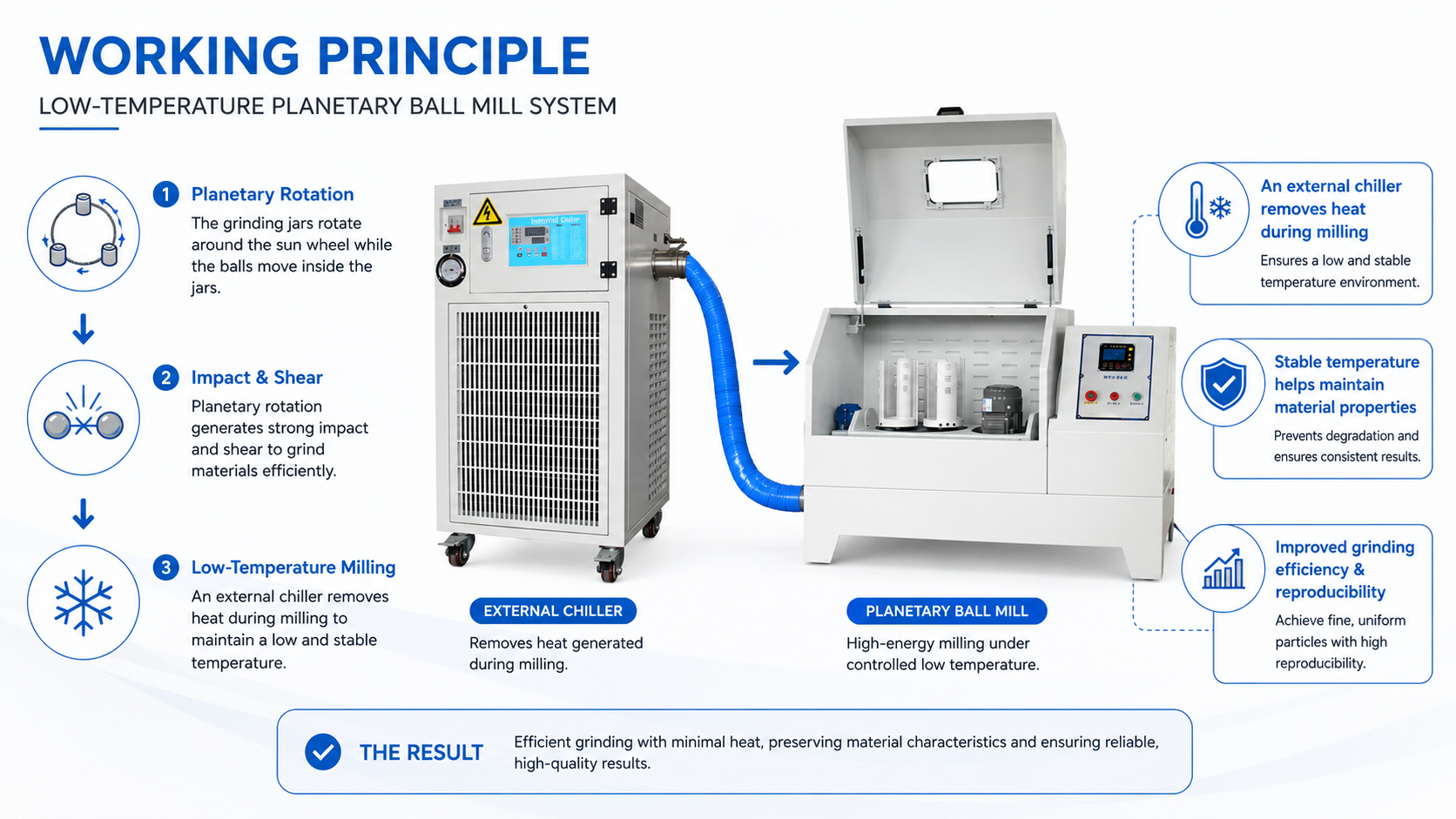
A low-temperature planetary ball mill is designed for processing materials that require strong grinding performance while avoiding heat-related damage. The cooling function makes it especially useful for samples that may change their properties when exposed to high temperatures. Choosing the right material type helps users achieve better grinding results and maintain the original characteristics of the sample.
Battery materials are one of the most common applications for low-temperature grinding. Materials such as lithium cobalt oxide, lithium iron phosphate, graphite, and other electrode powders often need careful temperature control during preparation. Excessive heat can affect particle structure and may reduce the accuracy of research results. A low-temperature planetary ball mill helps keep these materials stable while producing fine and evenly mixed powders.
Polymer materials are also suitable for this type of equipment. Some plastics and polymer powders can soften or become sticky when exposed to heat from friction. During normal grinding, the temperature increase may prevent the material from reaching the required particle size. Cooling during the process helps keep polymers firm, making it easier to achieve consistent powder quality.
Biological and pharmaceutical samples can also benefit from low-temperature processing. Some organic materials, proteins, and compounds are sensitive to heat and may lose their properties during regular grinding. A controlled low-temperature environment helps protect these samples while reducing them into smaller particles for further analysis.
Chemical materials and advanced powders are another important application area. Ceramic powders, catalysts, pigments, and composite materials often require precise particle sizes and uniform mixing. Low-temperature grinding reduces the risk of unwanted changes caused by heat and supports more reliable material preparation.
When selecting a grinding setup, users should consider both the sample properties and the jar materials. Hard materials may require wear-resistant grinding jars and balls, while sensitive samples may need cleaner materials that reduce contamination. For example, zirconia grinding sets are often chosen for high-purity applications, while stainless steel sets are commonly used for general laboratory work.
Before starting a grinding process, it is helpful to test a small sample first. Factors such as cooling temperature, grinding speed, and processing time may need adjustment depending on the material. The right combination of equipment settings and material selection can improve efficiency and protect the quality of the final product.
Speed, Time, and Jar Capacity Settings for a Low-Temperature Planetary Ball Mill
Setting the correct speed, grinding time, and jar capacity is important for getting stable results from a low-temperature planetary ball mill. These three factors affect how much impact force is created, how fine the particles become, and how well the cooling system can control heat during operation. A proper balance helps prevent over-grinding, overheating, and uneven particle sizes.
Rotation speed controls the movement and impact energy of the grinding balls. A higher speed creates stronger collisions, which can help break hard materials into smaller particles faster. However, higher speed also produces more friction and heat. When processing temperature-sensitive materials, users usually need to select a suitable speed instead of simply choosing the highest setting. For example, when grinding battery electrode powders, a moderate speed may provide enough energy for particle reduction while keeping the material structure stable.
Grinding time determines how much processing the material receives. Short grinding periods may not achieve the required particle size, while excessively long grinding can cause unnecessary wear, contamination, or changes in material properties. The best time depends on the hardness of the sample, the desired particle size, and the selected speed. A practical approach is to start with a shorter test cycle, check the results, and adjust the time step by step.
Jar capacity affects both grinding efficiency and cooling performance. The grinding jar should not be filled completely because the balls need enough space to move freely and create impact forces. In many applications, leaving enough empty space inside the jar allows better mixing and more effective heat removal. Overloading the jar can reduce grinding efficiency and make temperature control more difficult.
The ball-to-material ratio should also be considered when setting up the machine. Too little grinding media may slow down the process, while too many balls can increase friction and heat. Choosing the right combination of jar size, ball size, and material amount helps achieve better results.
Before running a full production or research cycle, users should record the selected speed, time, temperature, and material amount. Keeping these records makes it easier to repeat successful tests and improve future grinding processes. With proper settings, a low-temperature planetary ball mill can provide efficient grinding while protecting sensitive materials from heat damage.
Low-Temperature Planetary Ball Mill vs Standard Planetary Ball Mill
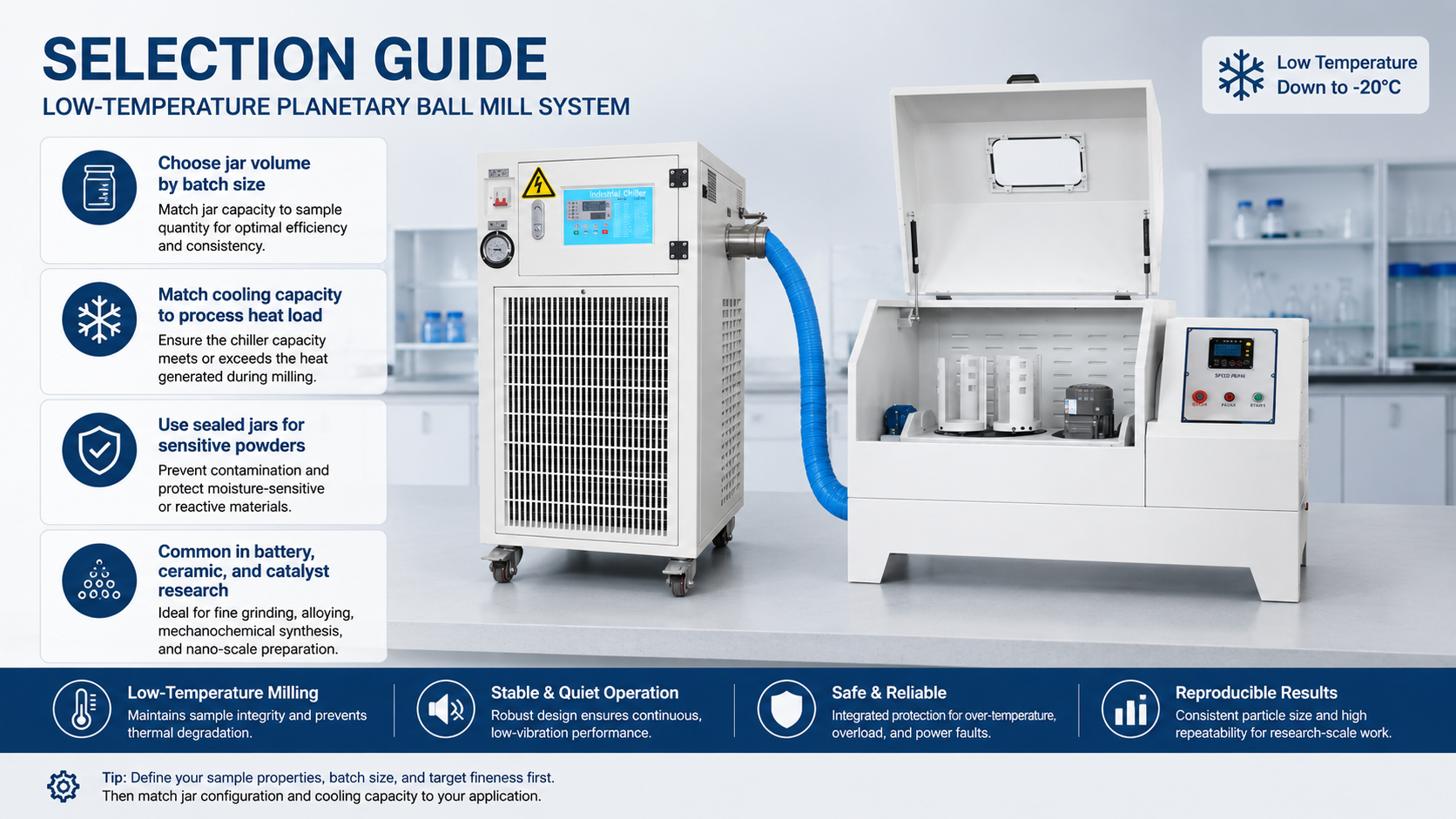
A low-temperature planetary ball mill and a standard planetary ball mill work on the same basic grinding principle, but they are designed for different material requirements. Both machines use high-speed rotation and grinding balls to crush, mix, and refine materials. The main difference is the ability to control heat during operation. Choosing between them depends on the type of material being processed and the level of temperature control needed.
A standard vibration ball mill is commonly used for general laboratory grinding tasks. It can handle materials such as ceramics, minerals, metals, and other solid samples that are not highly sensitive to heat. During operation, friction between the balls and the sample naturally increases the temperature inside the grinding jar. For many materials, this temperature rise does not create problems, making a standard model a practical choice for routine applications.
A low-temperature planetary ball mill adds a cooling system to manage the heat produced during grinding. This design helps maintain a stable temperature while the machine is running. It is better suited for materials that may change, melt, oxidize, or lose their properties when exposed to higher temperatures. For example, battery research often involves materials that require careful temperature control to maintain accurate testing results.
Another difference is the range of applications. Standard models are often enough for simple powder preparation and mixing. Low-temperature models are commonly used in advanced research fields, including battery materials, polymers, pharmaceuticals, biological samples, and special chemical compounds.
The choice between the two should be based on the material characteristics rather than only the equipment price. If the sample remains stable under normal grinding conditions, a standard planetary ball mill may meet the requirements. However, if heat affects particle structure, chemical activity, or final performance, a low-temperature model can provide better control.
People should think about things like how much material they need to grind, how well the machine cools, how much maintenance it needs, and how much it costs to run. A small study might only need cooling now and then, but ongoing work with materials might need a steady cooling setup.
Understanding the difference between these two types of equipment helps users avoid unsuitable choices and select a grinding solution that matches their actual processing goals.
Table of Contents
- How a Low-Temperature Planetary Ball Mill Controls Grinding Heat
- Key Structural Components of a Low-Temperature Planetary Ball Mill
- Suitable Materials for a Low-Temperature Planetary Ball Mill
- Speed, Time, and Jar Capacity Settings for a Low-Temperature Planetary Ball Mill
- Low-Temperature Planetary Ball Mill vs Standard Planetary Ball Mill

Changsha Tianchuang(TENCAN) Powder Technology Co., Ltd., established in 2006, is an integrated enterprise specializing in R&D, manufacturing, and sales. Its R&D, sales, and operations center is located in the Changsha Economic and Technological Development Zone, while its production base is in the Wushi High-tech Industrial Park.


