
 EN
EN  NL
NL FR
FR DE
DE HI
HI IT
IT KO
KO PL
PL PT
PT RU
RU ES
ES TR
TR AR
AR BG
BG HR
HR CS
CS DA
DA FI
FI EL
EL JA
JA NO
NO RO
RO SV
SV IW
IW ID
ID LV
LV LT
LT SR
SR SK
SK SL
SL UK
UK VI
VI ET
ET HU
HU UZ
UZ TH
TH FA
FA MS
MS BE
BE HY
HY AZ
AZ KA
KA MN
MN MY
MY KK
KK TG
TGA glove box with purification capabilities is a system made to establish an environment that allows for the safe handling of various materials. Numerous materials that are used in battery, chemistry, and electronics experiments are prone to reacting to small amounts of oxygen or water present in the atmosphere. Any changes in the humidity and oxygen content could alter the results of the experiments being conducted. Thus, Lab Glove Box allow scientists and manufacturers to work with more certainty. The following guide will describe how purification systems regulate the humidity and oxygen content, as well as how such a device operates.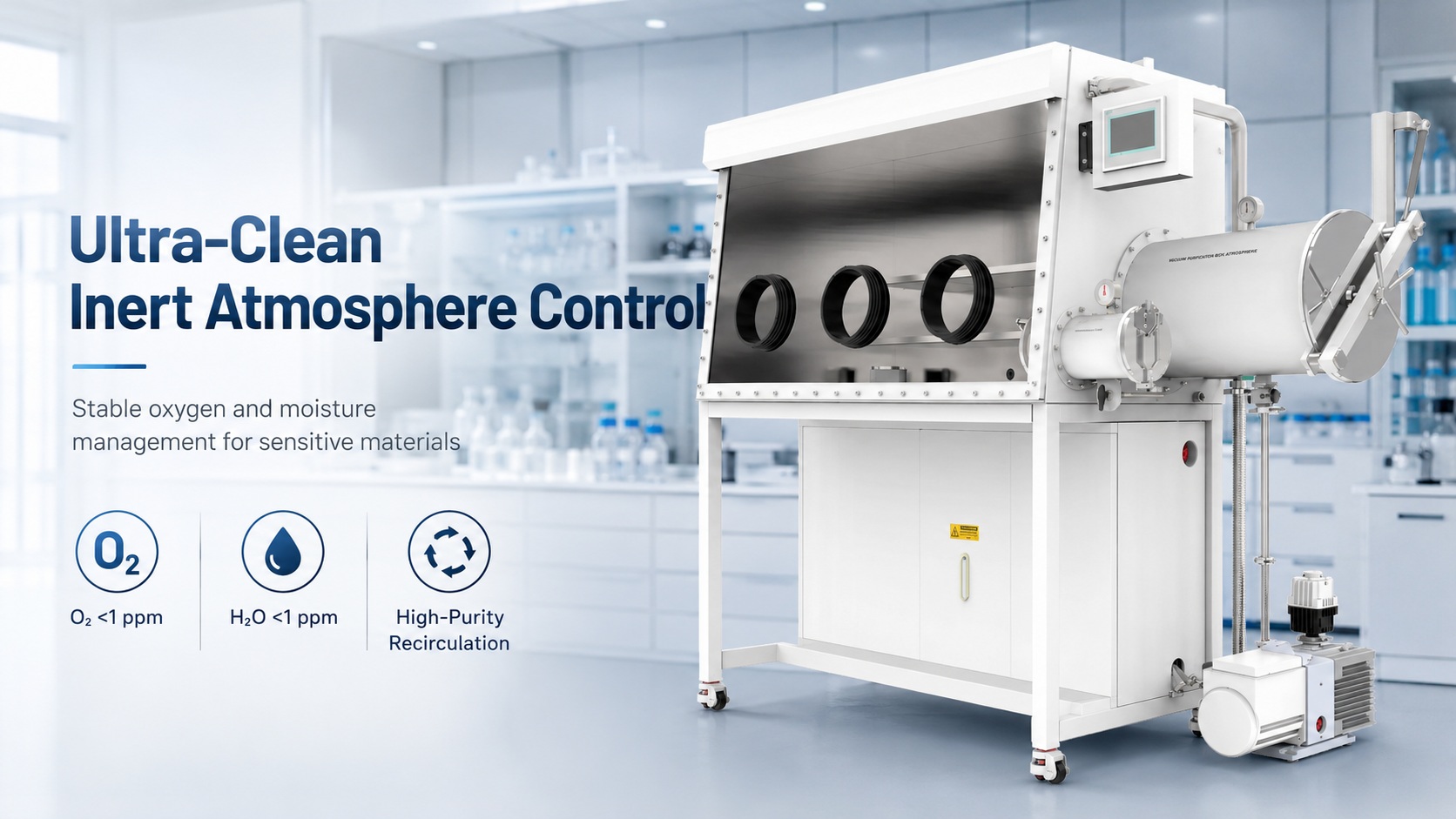
How the Purification System Maintains a Controlled Inert Atmosphere
A purification system is the core part that helps a glove box maintain a stable inert atmosphere. Inside the chamber, normal air contains oxygen, moisture, and other gases that may affect sensitive materials. The purification system removes these unwanted components and keeps the internal environment clean, usually by filling the chamber with inert gases such as argon or nitrogen.
The process starts with gas circulation. A built-in circulation system continuously moves the gas inside the glove box through purification columns or filters. These purification units contain special materials that capture oxygen and moisture. For example, copper-based materials can remove oxygen, while molecular sieve materials are commonly used to absorb water vapor. As the gas passes through these units again and again, the oxygen and moisture levels become very low and remain stable.
A common example is battery material research. Lithium-based materials can react quickly when exposed to air, causing changes in performance or safety risks. Researchers working with these materials often place them inside a glove box where the purification system keeps oxygen and moisture at very low levels. This allows them to prepare samples, assemble battery parts, and run tests without unwanted reactions from the surrounding environment.
To keep the atmosphere stable, users also need to pay attention to daily operation habits. Before placing materials inside, check that the transfer chamber has completed the correct gas exchange process. Avoid opening the main chamber door too often, as frequent exposure to outside air increases the workload of the purification system. Regular checks of oxygen and moisture sensors also help users find problems early.
A well-maintained purification system does more than remove impurities. It creates a reliable working space where sensitive experiments and production tasks can be completed with fewer environmental changes. By combining proper equipment settings with careful operating practices, users can maintain a consistent inert atmosphere for long-term work.
Key Functions of Gas Circulation, Purification, and Vacuum Transfer
A glove box depends on three important processes to maintain a clean and stable working environment: gas circulation, purification, and vacuum transfer. Each function plays a different role, but they work together to control oxygen, moisture, and contamination inside the chamber. Understanding how these systems work helps users operate the equipment correctly and avoid common mistakes.
Gas circulation keeps the internal atmosphere moving evenly throughout the glove box. Instead of allowing gas to stay still in certain areas, the circulation system sends the gas through purification units and returns the cleaned gas back into the chamber. This continuous flow helps maintain consistent oxygen and moisture levels at every working position. For example, when a researcher handles battery electrodes or chemical samples, the circulating gas helps prevent local areas with higher humidity or oxygen concentration.
The purification system works during this circulation process by removing unwanted substances from the gas. Oxygen removal units and moisture absorbers capture impurities and allow the same inert gas to be reused. This reduces gas consumption and helps the glove box maintain stable conditions for long periods. In laboratories, this function is especially useful when experiments need many hours or days of operation under low oxygen and moisture conditions.
Vacuum transfer is another key function that protects the controlled atmosphere when moving materials in and out. The transfer chamber uses vacuum cycles to remove air before the material enters the main chamber. This prevents outside oxygen and moisture from entering the glove box. For instance, when a technician needs to bring a sealed container, tools, or samples into the chamber, the transfer process creates a safer transition between the outside environment and the clean workspace.
Proper use of these three functions improves both equipment performance and work safety. Users should avoid rushing the transfer process, place materials correctly inside the transfer chamber, and follow the recommended vacuum and gas exchange steps. Simple operating habits can reduce contamination risks and help the purification system maintain stable conditions.
Together, gas circulation, purification, and vacuum transfer create a controlled environment where sensitive materials can be handled with better accuracy and reliability. These functions are especially valuable in fields such as battery development, semiconductor research, pharmaceutical testing, and advanced material processing.
Applications in Lithium Battery Materials, Metal Powder, and Nanomaterial Research
A glove box with a purification system is widely used in research areas where materials must be protected from oxygen and moisture. Lithium battery materials, metal powders, and nanomaterials can easily change when exposed to normal air. By providing a controlled inert atmosphere, a glove box allows researchers to prepare, test, and store sensitive materials with fewer risks of contamination or unwanted reactions.
In lithium battery research, glove boxes are commonly used during electrode preparation, electrolyte handling, and battery cell assembly. Many battery materials, especially lithium metal and certain electrolyte components, react quickly with water and oxygen. Even small amounts of moisture can affect battery performance and shorten testing accuracy. For example, when a researcher assembles a new lithium battery design, working inside a glove box helps keep the materials in their original condition so the test results better reflect the material performance.
Metal powder research is another important application. Fine metal powders used in additive manufacturing, coating technology, and advanced alloys may oxidize when exposed to air. Oxidation can change the powder properties, affect surface quality, and reduce the performance of the final product. A glove box provides a dry and oxygen-controlled space where researchers can weigh, mix, and examine metal powders without unwanted reactions. This is especially useful when working with active metals such as titanium, magnesium, or other materials that are sensitive to air exposure.
Nanomaterial research also requires careful environmental control. Nanoparticles often have very high surface activity because of their extremely small size. Contact with moisture or oxygen can change their structure and influence their behavior during experiments. Scientists working on catalysts, sensors, or electronic materials often use glove boxes to prepare samples and conduct tests in a stable environment.
When using a glove box for these applications, users should prepare materials properly before placing them inside. Removing surface moisture from tools and containers, reducing unnecessary door openings, and checking oxygen and moisture levels regularly can help maintain reliable working conditions.
From battery development to advanced material research, a controlled glove box environment gives researchers a cleaner and more predictable workspace. This helps improve experiment accuracy and supports the development of new technologies that depend on sensitive materials.
Main Configuration Options: Purifier, Analyzer, Vacuum Chamber, and Control System
Many materials and research processes are highly sensitive to oxygen and moisture. Even a tiny amount of air or water vapor can change test results, reduce product quality, or damage valuable samples. This is why many laboratories, battery manufacturers, universities, and electronics companies rely on a glove box with a purification system. By keeping oxygen and moisture at very low levels, the system creates a clean and stable workspace for handling sensitive materials. Whether you are working with lithium battery components, chemical powders, or advanced electronic parts, understanding how this equipment works can help you improve consistency, reduce waste, and protect your work from unwanted contamination.
Glove Box With Purification System vs Standard Laboratory Glove Box
At first glance, a glove box with a purification system and a standard laboratory glove box may look almost the same. Both provide an enclosed workspace that protects samples from the surrounding environment. The biggest difference is how they manage the air inside the chamber and the level of protection they can provide.
A standard laboratory glove box is designed mainly as a physical barrier. It helps keep dust, dirt, and direct contact away from the materials being handled. For many routine laboratory tasks, this type of glove box works well and offers a simple, cost-effective solution. However, the air inside the chamber usually contains normal levels of oxygen and moisture unless it is manually supplied with an inert gas. Each time the box is opened or accessed, the internal atmosphere can change, making it less suitable for highly sensitive materials.
A glove box with a purification system goes much further. It continuously circulates inert gas through a purifier that removes oxygen and moisture, allowing the chamber to maintain very low contamination levels for long periods. Sensors monitor these conditions in real time, so users can quickly see whether the environment remains within the required range. This creates a stable workspace for demanding applications such as lithium battery research, semiconductor development, catalyst preparation, and handling reactive chemicals.
Imagine two research teams preparing battery materials. One uses a standard glove box, while the other uses a purified glove box. The first team may need to stop frequently to replace gas or check for contamination after repeated use. The second team can continue working with greater confidence because the purification system automatically restores the atmosphere after normal operation. This saves time and helps produce more consistent results.
When deciding between the two options, think about the sensitivity of your materials and how often the glove box will be used. If your work can tolerate small changes in oxygen or moisture, a standard glove box may be enough. If your projects require stable environmental control and repeatable results, a glove box with a purification system is usually the better long-term choice.
Daily Operation, Purifier Regeneration, and Maintenance Tips
Keeping a glove box with a purification system in good condition does not require complicated routines, but regular care makes a big difference. Simple daily checks and proper maintenance help keep oxygen and moisture levels stable while extending the life of the equipment.
Before starting work each day, check the oxygen and moisture readings on the display. Make sure they are within the required range for your application before placing sensitive materials inside. Inspect the gloves for small cracks, loose fittings, or signs of wear. Even a tiny leak can allow outside air to enter, making it harder for the purifier to maintain a clean atmosphere. It is also a good habit to confirm that the gas supply has enough pressure and that the circulation system is running normally.
When transferring tools or samples through the vacuum chamber, avoid rushing the process. Complete the full vacuum and refill cycle each time instead of opening the inner door too early. This simple step greatly reduces the amount of oxygen and moisture entering the main chamber. Many users find that following the correct transfer procedure saves time later by preventing long recovery periods.
The purifier also needs attention after long periods of use. As it captures oxygen and moisture, the purification materials gradually become saturated. At this point, purifier regeneration is needed to restore their cleaning ability. Most modern systems include an automatic regeneration program. During this process, the purifier is heated while a regeneration gas removes the trapped contaminants. Always follow the manufacturer's recommended schedule instead of waiting until oxygen or moisture levels become difficult to control.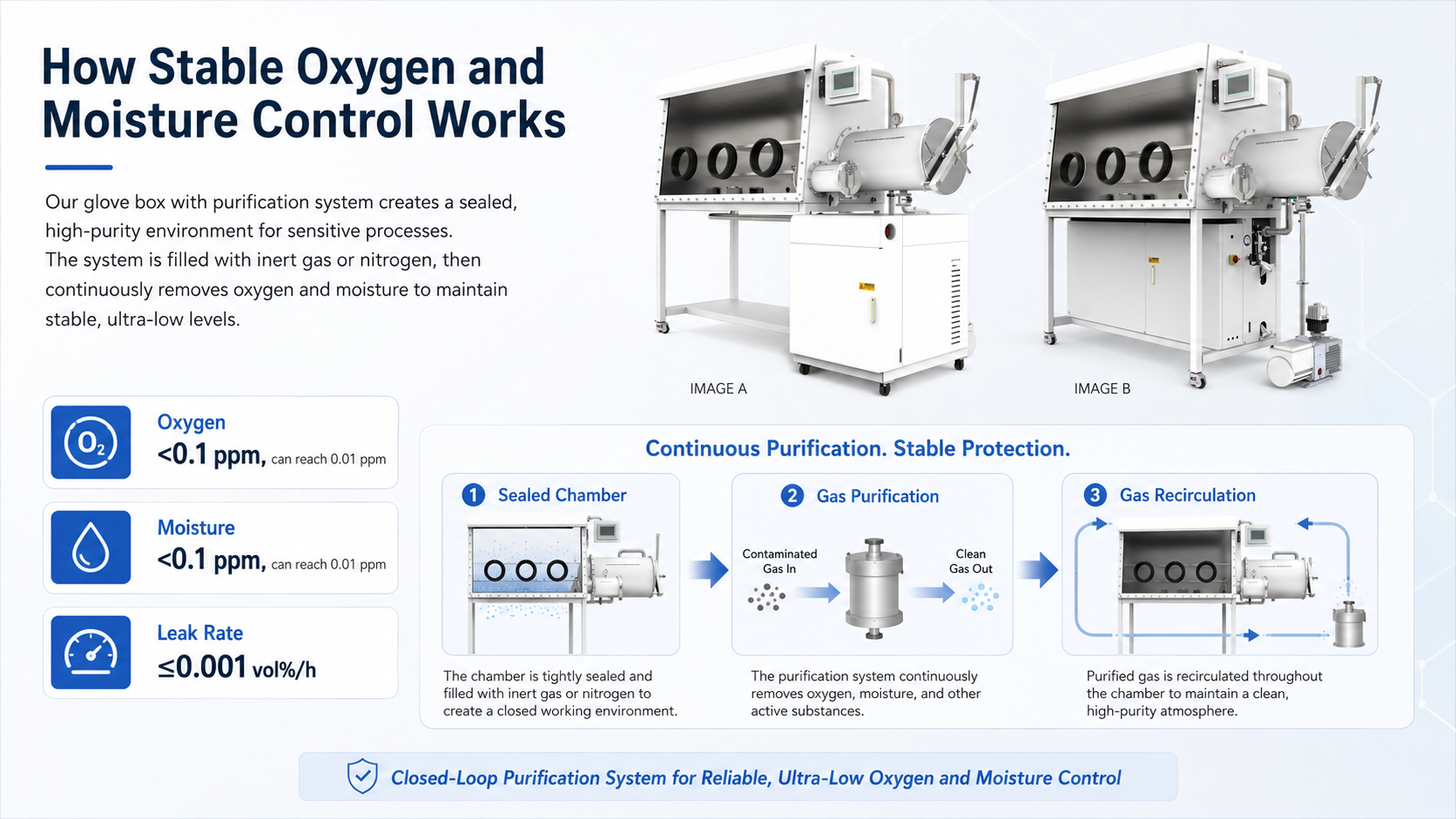
How to Achieve 1ppm Oxygen Levels with a Gas Purification Glove Box for Battery Assembly
Routine maintenance should also include cleaning the chamber, checking door seals, inspecting valves and gas lines, and replacing filters when needed. Keep the inside of the glove box free from unnecessary tools, dust, and chemical residue, as these can affect both cleanliness and system performance.
A laboratory that follows a regular maintenance plan often experiences fewer unexpected shutdowns and more stable working conditions. Spending a few minutes each day on basic inspection is much easier than dealing with contaminated samples, delayed experiments, or costly repairs later.
Table of Contents
- How the Purification System Maintains a Controlled Inert Atmosphere
- Key Functions of Gas Circulation, Purification, and Vacuum Transfer
- Applications in Lithium Battery Materials, Metal Powder, and Nanomaterial Research
- Main Configuration Options: Purifier, Analyzer, Vacuum Chamber, and Control System
- Glove Box With Purification System vs Standard Laboratory Glove Box
- Daily Operation, Purifier Regeneration, and Maintenance Tips

Changsha Tianchuang(TENCAN) Powder Technology Co., Ltd., established in 2006, is an integrated enterprise specializing in R&D, manufacturing, and sales. Its R&D, sales, and operations center is located in the Changsha Economic and Technological Development Zone, while its production base is in the Wushi High-tech Industrial Park.


